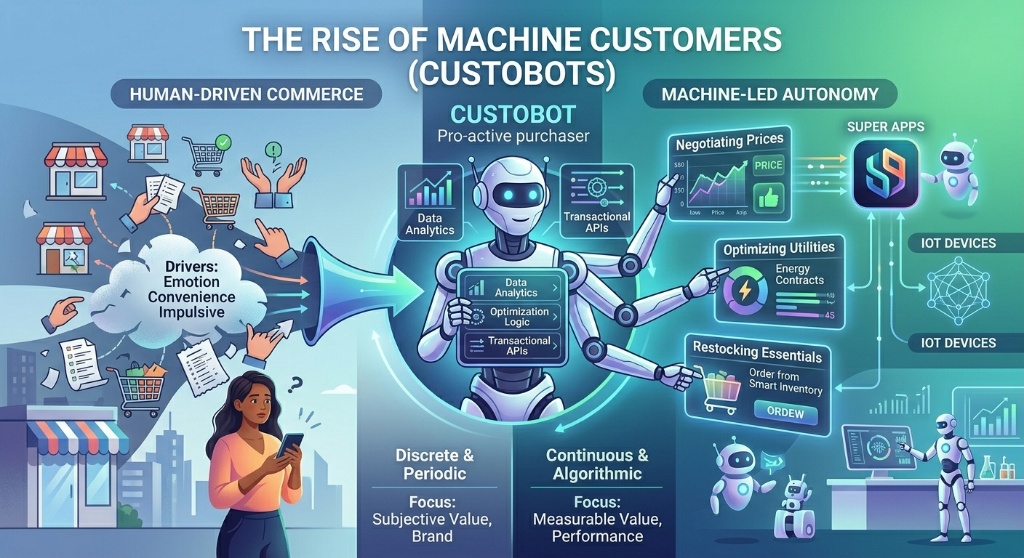
In 2026, your best customer might not even be human. The rise of Machine Customers (or "Custobots") has fundamentally altered the sales funnel, shifting the focus from emotional marketing to technical precision.
The Invisible Funnel
Enterprise AI agents now autonomously procure cloud storage, office supplies, and even raw materials. These transactions happen 24/7, optimized for price-per-unit and delivery-latency. The "Buyer Journey" has become a series of programmatic handshakes.
Accountability and \"Runaway\" Bots
New 2026 consumer protections now include Algorithm Cancellation Rights. If a misconfigured home bot orders excessive supplies, legal frameworks now exist to reverse machine-led errors without penalizing the human owner.
"The next customer journey may begin before a human ever reaches for a screen."Editorial Pull Quote
The Verdict
The age of the transactional shopper is ending. We are delegating the \"buy\" to machines so we can focus on the \"use.\" In 2026, the most valuable asset a company owns isn't its ad budget—it's its Integration Documentation.