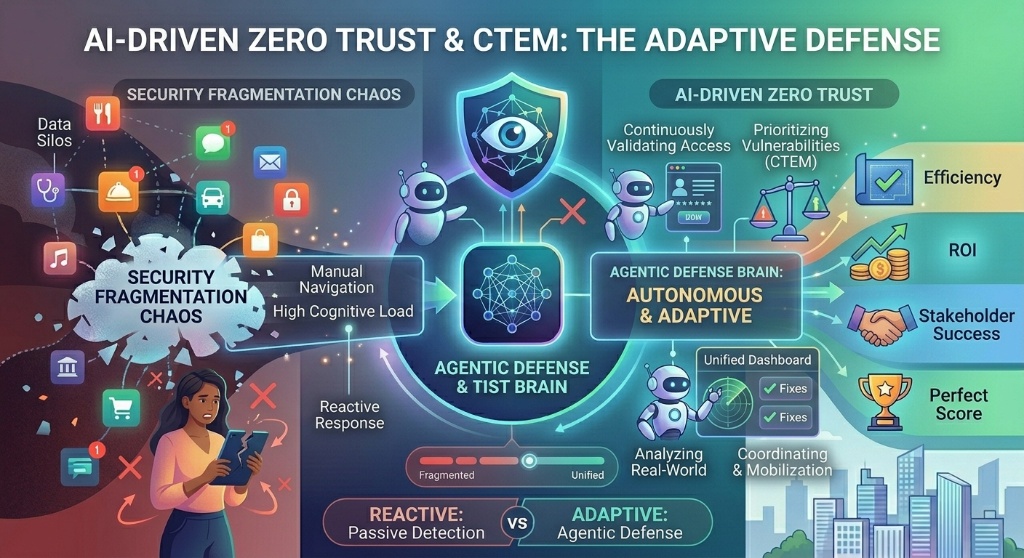
In the digital landscape of 2026, the perimeter has not just dissolved; it has become irrelevant. We operate in a world of Continuous Adaptive Trust, where identity is verified every millisecond through AI-driven behavioral analysis.
The 2026 Shift: Micro-Segmentation
AI-driven controllers now automatically segment network traffic at the granular level. If a single credential is compromised, the system instantly restricts the "blast radius" to an isolated container, preventing lateral movement across the enterprise.
2. The CTEM Framework
Continuous Threat Exposure Management moves security from reactive "firefighting" to proactive "risk orchestration." By discovery of "Shadow IT" and simulating breaches via AI, organizations can prioritize vulnerabilities based on real-world exploitability rather than generic severity scores.
3. Automated Remediation
When a vulnerability is identified, the Active Defense Layer can automatically apply "virtual patches" or adjust Zero Trust policies. This intent-based orchestration ensures the infrastructure remains resilient even before a permanent fix is manually deployed.
"The goal is no longer just to block threats. The goal is to keep operating while threats are already in motion."Editorial Pull Quote
The Verdict
Digital trust is the currency of the modern economy. By combining the strictness of Zero Trust with the vigilance of CTEM and the speed of AI, we have moved beyond surviving attacks to operating through them with total cyber resilience.