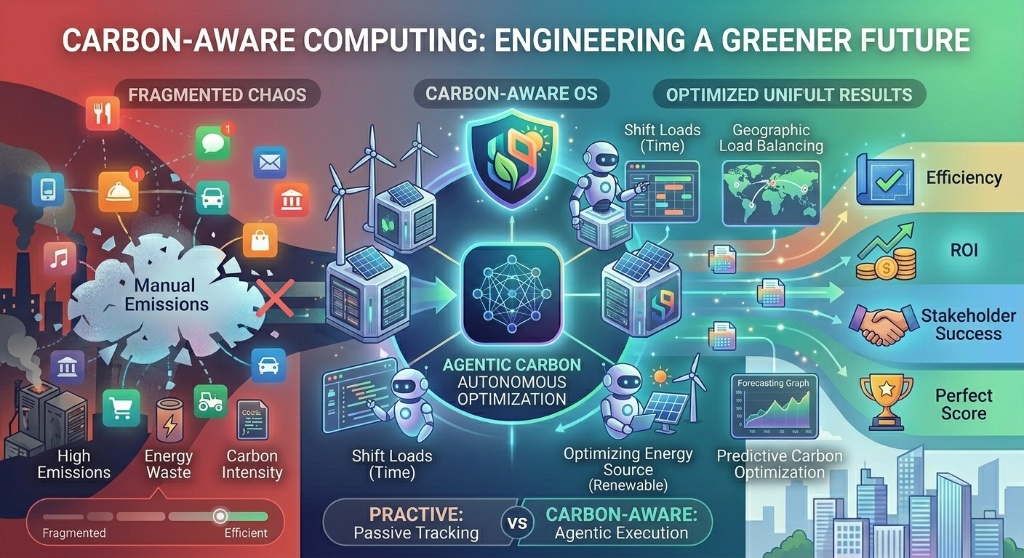
In 2026, the performance of an application is no longer measured solely by its latency or throughput. Carbon Intensity has become a core engineering metric, fundamental to the architecture of the modern web stack.
The 2026 Shift: Real-Time Intensity APIs
Developers no longer guess their impact. Integration with Real-Time Carbon Intensity APIs allows applications to adjust their own "quality of service" dynamically—reducing bitrates or compute intensity during peak carbon hours to minimize the environmental footprint.
2. Hardware & Infrastructure Reuse
Climate tech has reached the physical layer. Modern 2026 data centers now utilize Heat Reuse, piping the thermal energy from server racks into local district heating systems. Simultaneously, modular hardware design ensures that components are upgraded individually rather than discarded.
3. ESG & Mandatory Transparency
Carbon transparency is no longer optional. With the rise of Digital Product Passports, every piece of software now carries an estimated carbon footprint per session, driven by strict global Environmental, Social, and Governance (ESG) reporting standards.
"The mature digital product is not only efficient for users. It is accountable for the resources it consumes."Editorial Pull Quote
The Verdict
Treating carbon as a primary engineering constraint—just like latency or cost—is the final step in the maturation of the digital economy. We aren't just building for the cloud; we are building for the planet.