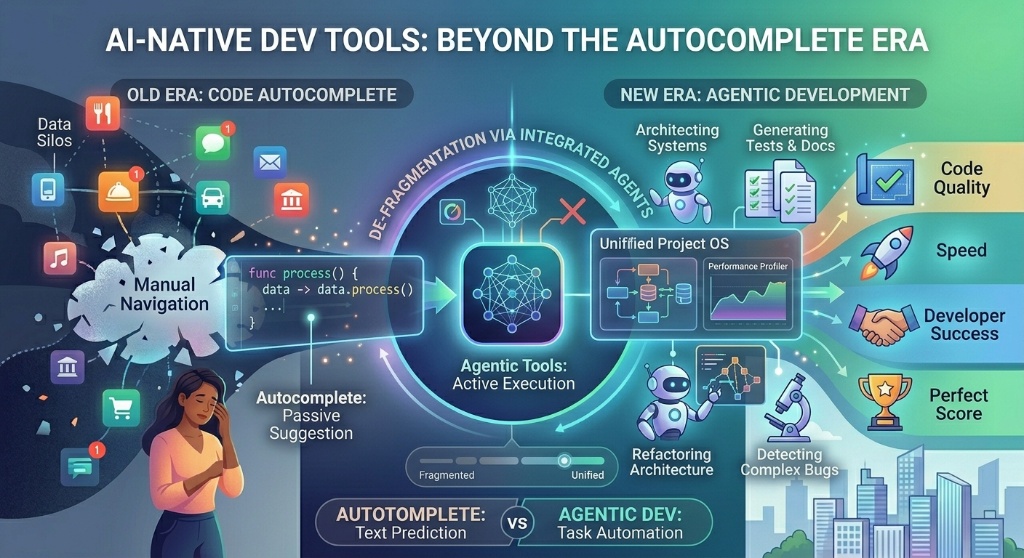
Coding in 2026 is a conversation. We have moved from simple autocompletion to Intent-Based Development, where the IDE functions as a senior partner rather than just a text editor.
1. Declarative Refactoring
We no longer manually swap out libraries or refactor complex logic. Developers now use declarative commands like "Convert this loop into an async stream," and the system refactors the logic globally while maintaining unit test coverage.
The 2026 Standard: Real-time Documentation
Documentation is no longer a chore. AI-native tools generate and update technical docs in real-time as the code evolves, ensuring the "source of truth" is always synchronized with the production environment.
2. Predictive Debugging
One of the most significant breakthroughs is the transition from reactive fixing to Predictive Debugging. Compilers now analyze execution paths to predict race conditions or memory leaks before they ever occur in a staging environment.
3. The System Orchestrator Role
The role of the engineer has shifted from a "writer" of code to a System Orchestrator. The primary task is now defining ethical guardrails, security constraints, and verifying the logic generated by AI teammates rather than manual implementation.
"The real leap in developer tools is not suggestion. It is collaboration at system speed."Editorial Pull Quote
The Verdict
AI-native dev tools haven't replaced developers; they have eliminated the drudgery. By raising the abstraction layer, engineers are finally free to focus on solving high-level architectural and strategic problems.