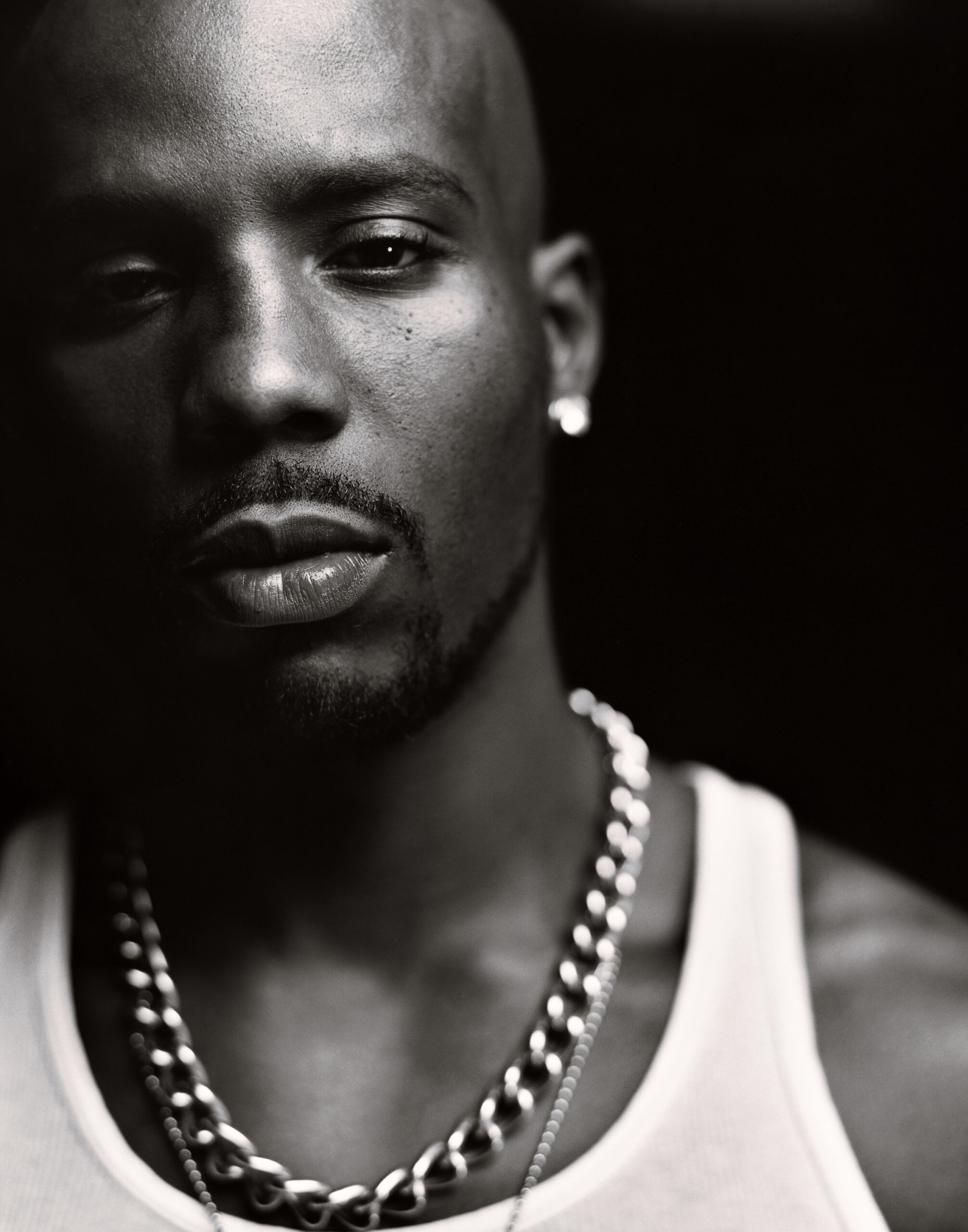
Early Life and Childhood Trauma
Earl Simmons, known to the world as DMX, was born on December 18, 1970, in Mount Vernon, New York, and was raised largely in Yonkers. Long before he became one of the most recognizable voices in hip-hop, his childhood was marked by pain, instability, and abandonment. He suffered from asthma as a child and grew up in an environment shaped by fear, poverty, and violence inside the home.
By his own account and through years of public interviews, Simmons endured severe physical abuse from his mother and other adults around him. Home was not a place of safety. It was a place where beatings, emotional trauma, and unpredictability were part of everyday life. That kind of upbringing left lasting wounds, and those wounds would later become central to his music. DMX did not build his art around fantasy. He built it around survival.
As a boy, he was frequently moved through institutions, group homes, and juvenile detention settings. Instead of receiving steady care, structure, and healing, he often found himself treated as a problem to be managed. Those years hardened him, but they also sharpened his instincts. He learned how to protect himself emotionally, how to read danger quickly, and how to carry pain without showing weakness. That emotional tension would later define his entire artistic identity.
The Beginning of DMX
Music became both refuge and release. During his youth, Simmons became fascinated by beat-making and rhyming, and he eventually adopted the name DMX, a name commonly linked to the Oberheim DMX drum machine that helped inspire him creatively. What began as an outlet slowly turned into a calling. In neighborhoods where many young men were swallowed by the street, rap gave him a language for his rage, his loneliness, and his spiritual confusion.
He developed his craft in battle rap circles, where presence mattered just as much as lyrics. DMX did not sound polished or delicate. He sounded urgent. Even before fame, he had a voice that felt lived in - rough, wounded, explosive, and impossible to ignore. His delivery made people stop what they were doing. His intensity felt real because it was real.
Grinding Through the Underground
Before mainstream success, DMX spent years trying to break through. He built a reputation in the New York underground through freestyle battles, street buzz, and relentless persistence. The industry did not hand him stardom overnight. He fought for visibility in an era crowded with major personalities and regional movements. But what separated him from many others was that he did not sound like anyone else.
At a time when hip-hop often rewarded slickness, luxury, and polish, DMX brought back rawness. His records sounded like testimony from someone who had lived every word he was saying. That sense of truth made his music feel heavier, riskier, and far more human than the polished image-driven rap dominating parts of the era.
The 1998 Breakthrough
In 1998, DMX exploded into the mainstream and changed the landscape of rap. His debut studio album, It's Dark and Hell Is Hot, arrived with enormous force and debuted at number one. It was driven by records such as Ruff Ryders' Anthem, Get At Me Dog, and Stop Being Greedy. The album did not just introduce a new star; it announced a new emotional register for mainstream rap - darker, harsher, more haunted, and more confessional.
That same year, he released a second album, Flesh of My Flesh, Blood of My Blood, which also debuted at number one. That achievement cemented his arrival as more than a one-album phenomenon. He was not simply hot for the moment; he was dominating the culture. Few artists in any genre have controlled a single year so completely, and DMX did it by giving listeners music that felt dangerous, spiritual, and deeply human all at once.
DMX's rise was not built on glamour. It was built on truth, intensity, and the feeling that every verse came from a place most people would never survive.Editorial Pull Quote
Dominance, Hit Records, and a Historic Run
His momentum continued with ...And Then There Was X in 1999, the album that pushed him even further into superstardom. It featured Party Up (Up in Here), his biggest crossover hit and one of the most recognizable rap songs of its era. The record made him unavoidable. He had already won the streets; now he had mainstream radio, clubs, television, and a global audience.
DMX followed that success with more chart-topping albums, including The Great Depression and Grand Champ. In the process, he made history as the only artist whose first five studio albums all debuted at number one on the Billboard 200. That kind of consistency is extraordinarily rare. It reflected not only commercial strength, but the depth of loyalty he inspired in listeners who saw something of themselves in him.
Why His Music Hit So Hard
DMX's music carried a level of emotional urgency that few rappers before him had shown so openly. He could deliver street anthems filled with menace and force, then turn around and offer prayers, cries for help, or songs filled with pain and regret. His albums often ended with spoken prayers in which he addressed God directly. These moments were central to understanding him. He did not present himself as morally clean or spiritually secure. He presented himself as a man in constant struggle, reaching for redemption while feeling pulled toward destruction.
That contradiction became his signature. He barked, growled, shouted, and attacked beats with unmatched energy, yet he also wept in interviews, spoke openly about betrayal, and exposed his fears. In a genre that often rewarded emotional armor, DMX made vulnerability part of strength. He did not weaken the image of the hardcore rapper. He complicated it.
Ruff Ryders and Cultural Impact
DMX's rise was closely linked with the Ruff Ryders movement, which became one of the most recognizable brands in hip-hop at the turn of the millennium. The collective represented grit, motorcycles, street energy, and aggressive East Coast power. DMX was its emotional center. Others had style and success, but he had a presence that felt spiritual and volcanic.
His influence reached beyond sales. He helped shift the sound and mood of commercial rap. He made pain marketable without making it feel fake. He made prayer part of hardcore rap. He showed that rage and faith could coexist in the same body, in the same verse, sometimes in the same breath.
Acting Career and Screen Presence
DMX also became a major film presence. He brought the same intensity to the screen that he brought to music. His acting career included roles in Belly (1998), Romeo Must Die (2000), Exit Wounds (2001), and Cradle 2 the Grave (2003). He was not a novelty casting choice; he had real charisma on camera. His stare, his voice, and his unpredictability translated naturally into film.
On screen, as in music, he played characters who felt dangerous but damaged, hard but human. That made him memorable. He did not need to overact. His presence did the work.
Addiction, Legal Trouble, and Inner War
For all his success, DMX remained haunted by addiction. He said that his crack cocaine addiction began when he was around 14 years old after an older mentor gave him a marijuana blunt laced with cocaine. That betrayal became one of the defining tragedies of his life. The addiction followed him for decades and shaped many of the collapses, arrests, relapses, and public struggles that interrupted his career.
Over the years, he faced repeated legal problems, including charges related to drug possession, tax issues, probation violations, and animal cruelty. These incidents damaged his career and often overshadowed his achievements. But even as his life became increasingly unstable, the public response to DMX was different from the response many celebrities receive. People did not merely judge him; many grieved for him in real time. They could see the suffering beneath the headlines.
His public life often looked like a cycle of resurgence and collapse. He would return with a powerful performance, an honest interview, or a moving prayer, reminding audiences of his brilliance, only for addiction and legal trouble to pull him back into crisis. That tension became part of how the world understood him: not as a fallen star in a simple sense, but as a man locked in a lifelong fight with himself.
Faith, Pain, and Public Honesty
One of the reasons DMX remained beloved even in his darkest moments was his honesty. He did not package his pain into a clean redemption story. He talked about failure, relapse, shame, rage, and hope without pretending to have solved them. His spirituality was not decorative. It was desperate, searching, and deeply personal.
Fans connected to that honesty because it felt rare. DMX gave voice to people who felt broken, people who believed in God but struggled daily, people who carried trauma they could not easily explain. He spoke to the underdog not by romanticizing suffering, but by sounding like someone who understood it from the inside.
Final Days and Death
In April 2021, DMX was hospitalized after suffering a heart attack. News of his condition spread quickly, and fans around the world waited anxiously for updates. On April 9, 2021, he died at the age of 50. His death triggered an enormous outpouring of grief from across music, film, sports, and communities that had long claimed him as one of their own.
He was mourned not only as a superstar, but as a symbol of pain, resilience, and emotional truth. Memorial events, including a major public tribute at Brooklyn's Barclays Center, showed the scale of his cultural impact. To millions, DMX was not just a rapper. He was a voice that made suffering audible.
Legacy
DMX remains one of the most distinctive figures hip-hop has ever produced. He was commercially historic, emotionally fearless, spiritually searching, and artistically unforgettable. His voice could sound like fury, prayer, grief, and command all at once. Very few artists have ever merged street credibility, mainstream success, and raw vulnerability so completely.
His legacy endures because he never sounded manufactured. He sounded wounded, alive, and real. In that sense, DMX became more than an artist. He became a mirror for struggle itself - proof that greatness can emerge from deep pain, and that even the strongest voices can carry enormous hurt behind them.