Federal authorities and state officials are confronting growing concerns over alleged large-scale fraud within California's healthcare system, as recent investigations and viral media coverage bring renewed attention to oversight, accountability, and the use of public funds.
The issue has gained national visibility following a series of federal enforcement actions targeting hospice providers accused of fraudulent billing practices. At the same time, independent journalist Nick Shirley has drawn widespread attention through online investigations alleging broader patterns of misuse across multiple public programs.
Federal Investigation and Hospice Fraud Allegations
In late 2025, federal authorities announced a coordinated enforcement initiative targeting alleged healthcare fraud schemes in Southern California. As part of the operation, multiple individuals were charged in connection with a scheme that prosecutors say involved tens of millions of dollars in fraudulent Medicare claims.
According to the Department of Justice, the alleged scheme involved recruiting individuals who were not terminally ill and enrolling them in hospice care programs in exchange for financial incentives. Hospice care, by definition, is intended for patients with a life expectancy of six months or less, making such allegations particularly serious.
Investigators cited data suggesting unusually low mortality rates at certain facilities, raising concerns about whether patients were appropriately admitted. Officials argue that such patterns are inconsistent with the intended purpose of hospice services and may indicate systemic abuse.
"Hospice care is designed to support individuals at the end of life," a federal official stated. "When admission criteria are misused, it undermines both patient care and public trust."
Authorities have emphasised that the charges remain allegations, and all defendants are presumed innocent unless proven guilty in court. Nonetheless, the case has intensified scrutiny of oversight mechanisms within federally funded healthcare programs.
Broader Concerns Around Systemic Vulnerabilities
The hospice investigation has also prompted wider discussion about vulnerabilities in reimbursement systems. Some analysts argue that certain billing structures may be susceptible to exploitation if not closely monitored, particularly in high-volume urban regions.
In addition, reports have highlighted concerns about ambulance service billing practices and the potential for inflated reimbursements, although these claims remain subject to ongoing review and have not been uniformly substantiated.
Healthcare policy experts note that fraud prevention in large-scale programs such as Medicare requires balancing accessibility with rigorous oversight - a challenge that becomes more complex in states with large populations and extensive provider networks.
The Role of Independent Media
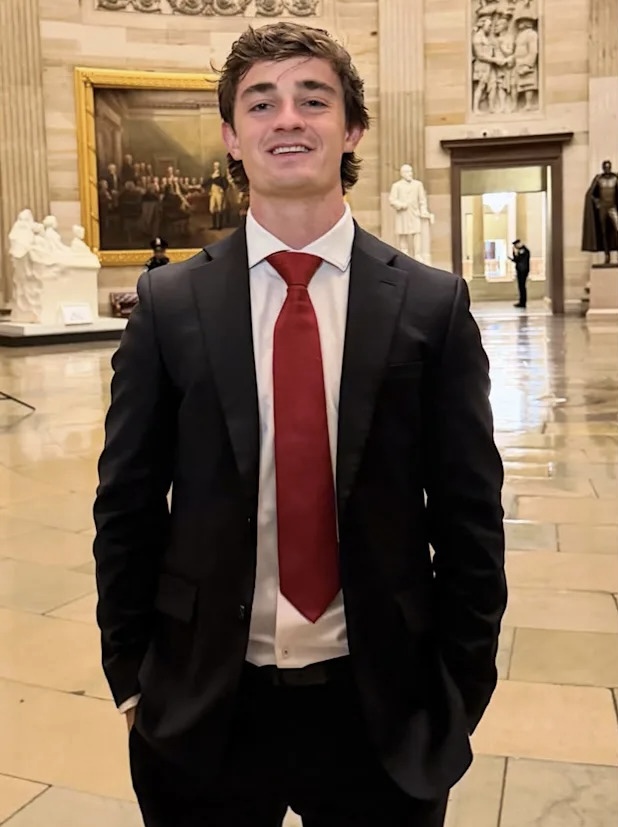
Parallel to official investigations, independent journalist Nick Shirley has gained attention for a series of online videos examining alleged fraud in publicly funded programs. His recent documentary-style content focuses on California, where he claims to have identified irregularities across multiple sectors.
Shirley's reporting has attracted a significant online audience, with supporters praising his efforts to highlight potential issues that may otherwise receive limited attention. His work frequently involves on-site visits to facilities, interviews, and visual documentation.
However, critics caution that such investigations, while impactful, may not always provide complete context. They emphasise the importance of corroborating claims through formal investigations and verified data before drawing definitive conclusions.
Political Response and Public Debate
The situation has also entered the political arena. California Governor Gavin Newsom's administration has faced criticism from some commentators who argue that stronger oversight measures are needed. In response, state officials have pointed to ongoing anti-fraud initiatives and enforcement actions already undertaken.
According to statements from the Governor's office, California has implemented measures to detect and prevent fraud, including increased monitoring and restrictions on new hospice licenses in recent years. Officials maintain that combating fraud remains a priority and that investigations are actively ongoing.
The debate has extended to social media, where exchanges between public figures and commentators have further amplified public interest. While some view this as an example of increased transparency and accountability, others argue it risks oversimplifying complex regulatory issues.
Implications for Policy and Public Trust
Legal analysts suggest that the outcome of current investigations could have significant implications for healthcare policy and enforcement strategies nationwide. In particular, the cases may influence how federal and state agencies approach fraud detection, data analysis, and regulatory compliance in healthcare systems.
For patients and taxpayers, the stakes are considerable. Fraudulent activity, if proven, can divert resources away from legitimate care and undermine confidence in public programs designed to support vulnerable populations.
At the same time, experts stress the importance of distinguishing between verified misconduct and unproven allegations, particularly in an era where information spreads rapidly through digital platforms.
An Issue Still Developing
As investigations continue, the full scope of the alleged fraud - and the extent to which it reflects isolated incidents or broader systemic issues - remains to be determined. What is clear, however, is that the intersection of healthcare, public funding, and media scrutiny will continue to shape the conversation in the months ahead.
Ultimately, the situation raises a fundamental question:
How can oversight systems ensure accountability while maintaining fairness and accuracy in an increasingly complex and highly visible public landscape?
The headline matters, but the deeper story is how pressure, environment, and public image shape a life.Editorial Pull Quote